World History
The history of Greece
6 parts · 5,053 words · 25 minutes to read
road ferry flight
Map of the places in this history
Select a place named in the text, on the map or in the list. Points mark approximate locations of sites and towns; no historical boundaries are drawn, and the outlines are today's coasts and borders. Ancient names are in italics.
The map could not be loaded here, so the places are listed below.
All 37 places, as a list
- Athens modern · Athenai ancientInhabited from the Neolithic, the leading city of Classical Greece and capital of the modern state since 1834.Part 1Part 2Part 3Part 4Part 5Part 6
- Apidima modernA cave in the Mani where a skull more than two hundred thousand years old was found; how to read it is still debated.Part 1
- Franchthi Cave modernA cave in the Argolid used on and off for tens of thousands of years, with obsidian from Melos by the end of the last Ice Age.Part 1
- Melos ancient · Milos modernThe island whose obsidian was carried across the Aegean from the Palaeolithic on.Part 1
- Sesklo modernOne of the Neolithic villages of Thessaly.Part 1
- Dimini modernA later Neolithic village in Thessaly.Part 1
- Knossos ancientThe largest Minoan palace, five kilometres south of Heraklion, built over a village founded around 7000 BC and excavated by Arthur Evans from 1900.Part 1Part 2
- Santorini modern · Thera ancient · Thira official Greek nameThe volcanic island whose great Bronze Age eruption buried Akrotiri; Thera to the ancient Greeks, Santorini from the Latin period.Part 1Part 2Part 3Part 4Part 5
- Akrotiri modernA Bronze Age harbour town on Santorini, buried and preserved by the eruption.Part 1Part 2
- Phaistos ancientA Minoan palace in the south of Crete.Part 2
- Malia ancientA Minoan palace on the north coast of Crete.Part 2
- Heraklion modern · Chandax Arab emirate, 820s–961 · Candia Venetian, 1211–1669Founded as Chandax by the Arab emirs of Crete, Venetian Candia withstood an Ottoman siege from 1648 to 1669; the Morosini Fountain dates from 1628.Part 2Part 5
- Mycenae ancient · Mykines modernThe richest Bronze Age citadel, which gives the Mycenaean age its name.Part 2
- Tiryns ancientA fortified Mycenaean palace near the head of the Argolic Gulf.Part 2
- Pylos ancient · Palace of Nestor modernA Mycenaean palace whose Linear B tablets record its administration.Part 2
- Thebes in English · Thebai ancient · Thiva modernA Mycenaean palace centre, later the city that broke Spartan power at Leuctra.Part 2Part 4
- Troy ancient · Hisarlık modernThe city of the Trojan legend, in north-west Turkey, destroyed more than once.Part 2
- Lefkandi modernA site on Euboea whose rich burials show wealth in the Early Iron Age.Part 3
- Olympia ancientThe sanctuary of Zeus where the Olympic games were held.Part 3
- Cyrene ancient · Shahhat modernA city in Libya founded from Thera around 631 BC, according to Herodotus.Part 3
- Gortyn ancient · Gortyna modernWhere the great law code was inscribed in the fifth century BC; later the capital of Roman Crete and Cyrenaica.Part 3Part 5
- Marathon ancient · Marathonas modernWhere the Athenians defeated a Persian landing in 490 BC.Part 3
- Salamis ancient · Salamina modernThe strait where the Greek fleet beat Xerxes' navy in 480 BC.Part 3
- Plataea ancient · Plataies modernWhere the Persian army was defeated in 479 BC.Part 3
- Piraeus modern · Peiraieus ancientThe port of Athens, fortified from 493/2 BC and joined to the city by the Long Walls in the 450s BC.Part 3Part 4Part 5
- Phaleron ancient · Palaio Faliro modernThe open beach that served as Athens' harbour before Piraeus was fortified.Part 3
- Leuctra ancient · Lefktra modernThe battlefield where Thebes defeated Sparta in 371 BC.Part 4
- Chaeronea ancient · Chaironeia modernWhere Philip II of Macedon defeated Athens and Thebes in 338 BC.Part 4
- Corinth modern · Korinthos ancientA great trading city, sacked by Rome in 146 BC and visited by Paul.Part 4Part 5
- Mesa Vouno modern · Thera ancient townThe ridge-top town of ancient Thera, its remains largely of the Hellenistic period, when the Ptolemies kept a naval base on the island.Part 4
- Constantinople Roman and Byzantine · Byzantion ancient · Istanbul modernRefounded by Constantine on the site of Byzantion and dedicated as his capital in 330; taken by crusaders in 1204 and by the Ottomans in 1453.Part 5
- Spinalonga modernAn islet off north-east Crete fortified by Venice from 1579 and held by it until 1715; a leper colony in the twentieth century until 1957.Part 5
- Epidaurus ancient · Nea Epidavros modernNear here the First National Assembly met and declared independence in 1822; the exact meeting place is given differently by sources.Part 6
- Navarino Venetian and Ottoman · Pylos Bay modernThe bay where British, French and Russian ships destroyed the Ottoman-Egyptian fleet in 1827.Part 6
- Thessaloniki modern · Thessalonica ancient and ByzantineA great city of the Roman and Byzantine north, taken by Greece in 1912.Part 6
- Smyrna ancient and Ottoman · İzmir modernThe city on the Anatolian coast burned in September 1922, when its Greek population was driven out.Part 6
- Kavala modern · Neapolis ancientA port in eastern Macedonia, where King Constantine II flew in December 1967 in a failed attempt to rally the army against the colonels.Part 6
Land, Peoples and First Settlers
c. 7000 to 3200 BC
Greece is the southern end of the Balkan peninsula, a land of mountains broken by small plains and almost surrounded by sea. Most of it is upland, and the fertile lowlands of Thessaly, Boeotia, Attica and the Argolid are separated from one another by ridges that made travel overland slow. The sea did the opposite. Thousands of islands, from Crete, the largest, to the scattered Cyclades, sit within sight or a day's sail of one another, and the coast runs for more than thirteen thousand kilometres. For most of its history Greece was held together less by its land than by the Aegean.
Many peoples have shaped it. Greek itself is first recorded in the fifteenth or fourteenth century BC, which gives it one of the longest written histories of any language, but the people who first farmed this land, and the Minoans of Crete, spoke languages that are lost. Over the centuries that followed, Phoenicians, Persians, Macedonians, Romans, Slavs, Arabs, Venetians and Ottomans all ruled, settled or traded here, and each left a mark. Greece matters in world history for what was made in it during one remarkable stretch: the self-governing city, democracy at Athens, philosophy, drama and the writing of history. It matters, too, for what followed: the Greek of the Hellenistic and Roman east, in which the New Testament was written, and the Byzantine empire, which carried Greek learning and Orthodox Christianity through the Middle Ages.
People were in Greece long before any of this. A skull from Apidima cave in the Mani has been dated to more than two hundred thousand years ago, though how to read it is still argued over. At Franchthi Cave in the Argolid people lived on and off for tens of thousands of years, and by the end of the last Ice Age they were bringing back obsidian from the island of Melos, which means they were already crossing open sea.
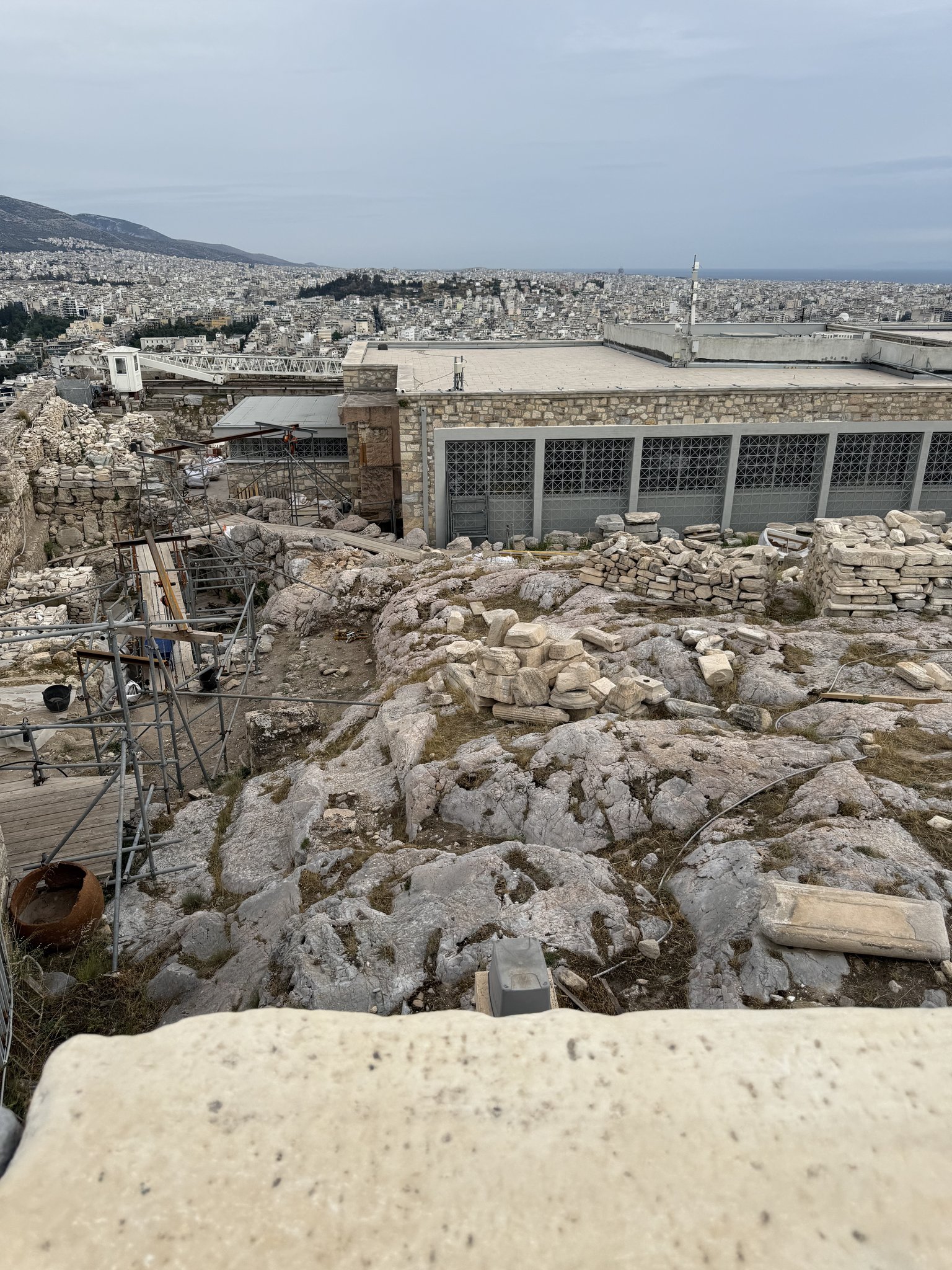
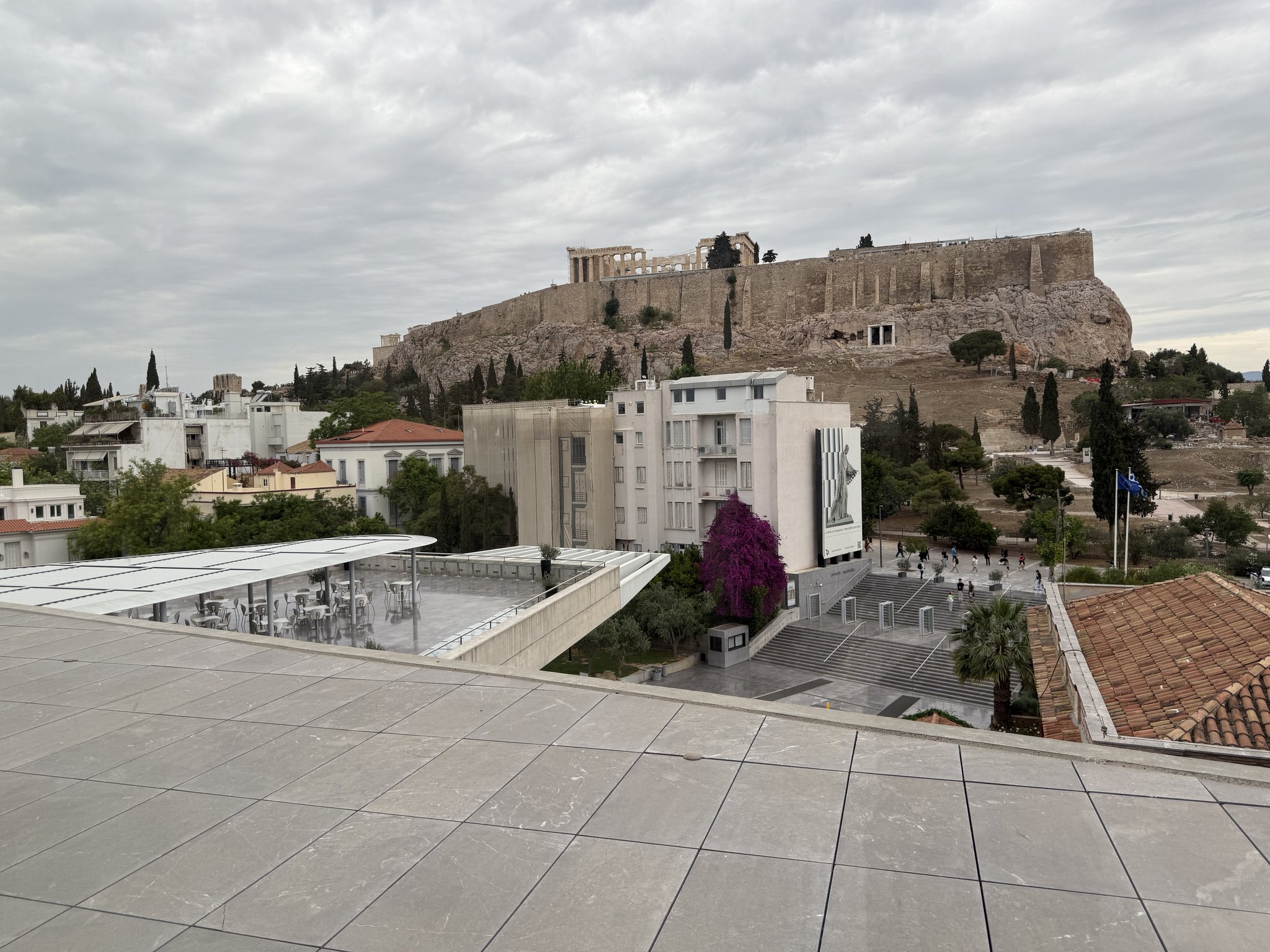
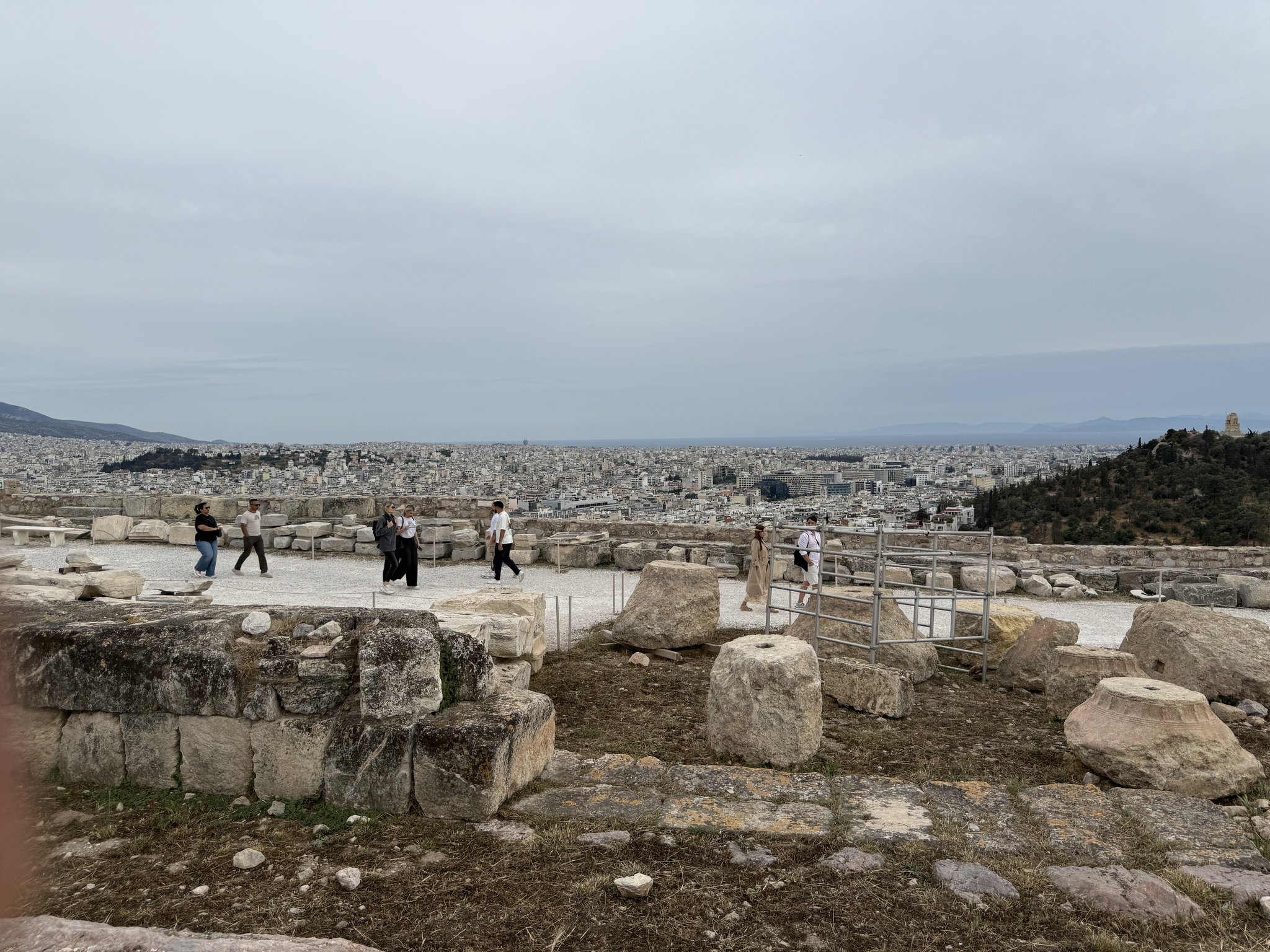
Farming came in the seventh millennium BC. Wheat, barley, lentils, sheep and goats were all domesticated first in south-west Asia, and ancient DNA shows that the first Greek farmers descended largely from farmers of Anatolia. How far they replaced the foragers already here, and how far they joined them, is still debated. The change did not happen everywhere at once. Thessaly filled with villages such as Sesklo and later Dimini, while many of the smaller islands stayed empty for centuries. Crete was settled from the start: beneath the later palace at Knossos lies a village founded around 7000 BC, which grew slowly over three thousand years. In Athens people lived on and around the Acropolis rock from the Neolithic onwards, and on Santorini the site of Akrotiri was first settled around the middle of the fifth millennium BC.
The Greeks later told their own stories of these beginnings: of Pelasgians who lived here before them, and of Deucalion, who survived a flood sent by Zeus. These were myths, not memories. Everything known about Greece before writing comes from archaeology, and it shows not a single line of progress but many regions moving at their own pace.
Bronze Age Palaces: The Cyclades, Crete and Mycenae
c. 3200 to 1100 BC
Bronze working spread through the Aegean in the late fourth and third millennia BC, and with it came larger settlements and wider trade. In the Cyclades this was the age of the flat marble figurines that now stand in museums across the world; no one knows what they were for. On Santorini, Akrotiri grew from a village into one of the busiest harbour towns in the Aegean.
Crete went furthest. From around 1900 BC great palace complexes rose at Knossos, Phaistos and Malia, each the centre of a territory, gathering and storing oil, wine and grain and keeping accounts in a script now called Linear A, which has never been deciphered. After destructions around 1700 BC they were rebuilt on a grander scale. "Minoan" is a modern label, coined by Arthur Evans, who excavated Knossos from 1900, after Minos, the king of Greek legend. The story of Minos, the labyrinth and the Minotaur was told by Greeks a thousand years later; it may echo the maze-like palace and the bull imagery found there, but it is not a record of events. Knossos lies five kilometres south of modern Heraklion, whose Archaeological Museum holds the finest of its frescoes, seals and pottery.
Some time in the late seventeenth or the sixteenth century BC the volcano of Santorini erupted, one of the largest eruptions of the last ten thousand years. Radiocarbon dates point to the later 1600s, while dates drawn from Egyptian chronology suggest a century or so later; the gap has still not been closed. Akrotiri was buried under metres of pumice and ash, which preserved its streets, its multi-storey houses and their wall paintings. No victims of the eruption have been found there, so the people seem to have had warning and left. The eruption spread ash across the eastern Mediterranean and sent waves onto the north coast of Crete, yet it did not end Minoan civilisation, as was once thought: the palaces carried on for several generations.
On the mainland a different society took shape from about 1600 BC, named Mycenaean after its richest citadel. Its rulers were buried with gold masks and weapons, and in the fourteenth and thirteenth centuries BC they built fortified palaces at Mycenae, Tiryns, Pylos, Thebes and elsewhere. Athens had one too, and parts of its massive thirteenth-century wall survive on the Acropolis. Around 1450 BC most of the Cretan palaces were destroyed, and Knossos, alone among them, carried on under rulers who kept their records in Linear B. When Michael Ventris deciphered that script in 1952, it turned out to be an early form of Greek, which makes the Mycenaeans the first Greek speakers known by name.
Their world fell apart around 1200 BC. Palace after palace was burned and abandoned, at the same time as the Hittite empire collapsed and much of the eastern Mediterranean fell into turmoil. Drought, earthquakes, raiders, revolt and the failure of trade have all been proposed; most historians now think several causes worked together. Later Greeks set their Trojan War in this age. Excavations at Troy show a city that was destroyed more than once, but whether Homer's war took place, and in what form, cannot be proved.
From the Dark Age to Classical Athens
c. 1100 to 404 BC
For two or three centuries after the collapse, Greece was poorer and emptier. Writing went out of use, monumental building stopped, and many settlements shrank or were abandoned, though Athens was never deserted. This period is often called the Dark Age, chiefly because so little evidence survives; finds such as the rich burials at Lefkandi in Euboea show that wealth and contacts abroad did not disappear entirely. In the eighth century BC the pace quickened. Greeks adapted the Phoenician alphabet, adding letters for vowels, and the Homeric epics, long passed down by oral poets, took the form in which they were later written down.
Out of this recovery came the polis, the self-governing city with its surrounding land. There were hundreds of them, fiercely independent, sharing a language, gods and festivals such as the games at Olympia. Between about 750 and 550 BC Greeks founded new cities around the Mediterranean and the Black Sea. Thera, as Santorini was then called, was settled by Dorians who claimed descent from Sparta, and according to Herodotus the Therans in turn founded Cyrene in Libya around 631 BC. On Crete the Dorian cities developed their own institutions; the great law code inscribed at Gortyn in the fifth century BC is the most complete Greek law code to survive.
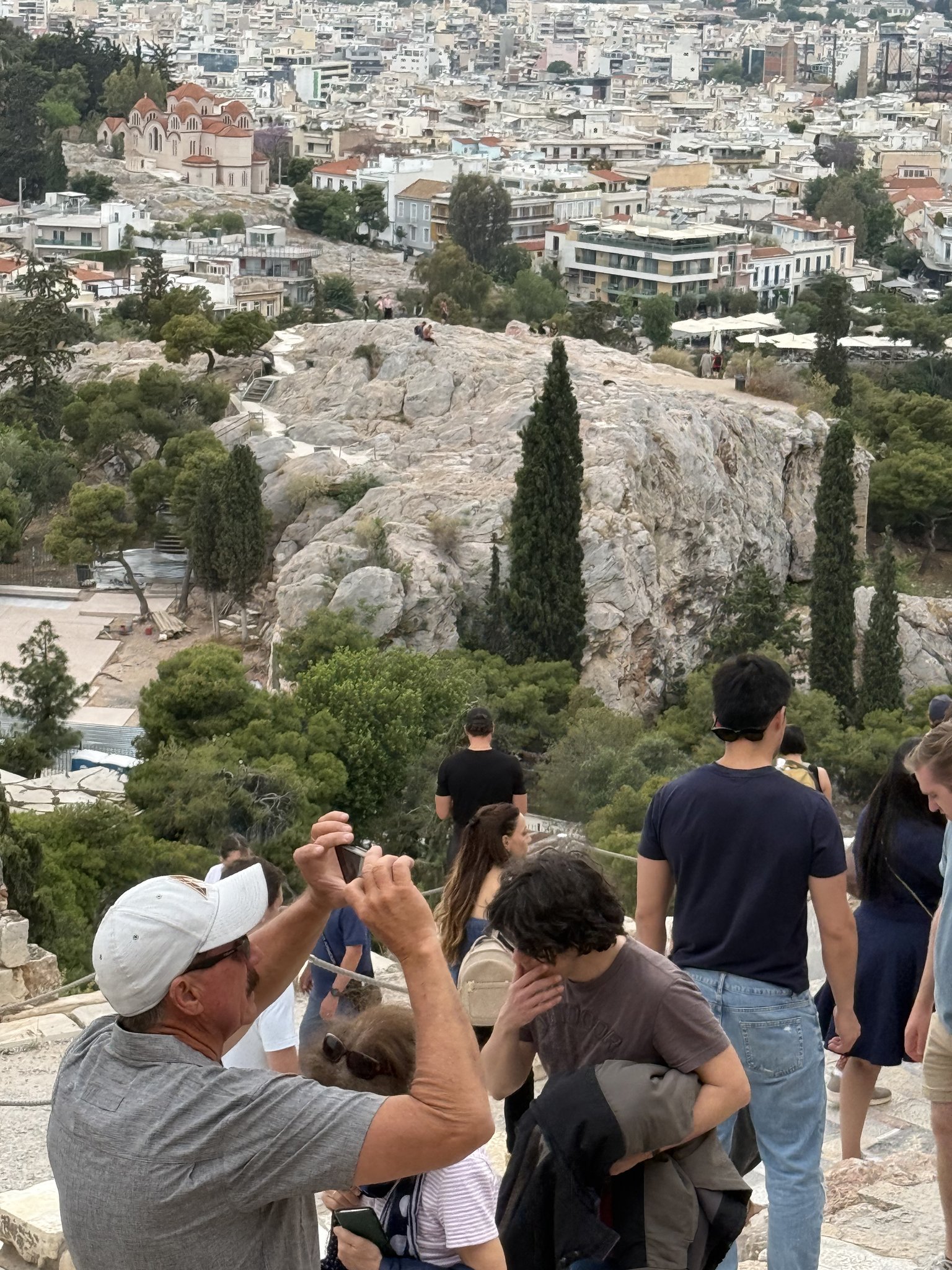
Athens followed its own path. Solon's reforms in the early sixth century BC ended enslavement for debt and opened office to wealth rather than birth. Peisistratos and his sons ruled as tyrants for much of the following decades, and after their fall Cleisthenes reorganised the citizen body in 508 BC, laying the foundations of a democracy in which every adult male citizen could vote in the assembly. Women, slaves and resident foreigners had no such rights.
Persia, the greatest empire of the age, then turned on the Greeks. The Athenians defeated a Persian landing at Marathon in 490 BC. Ten years later Xerxes invaded in force and sacked Athens, burning the temples on the Acropolis, but his fleet was beaten at Salamis in 480 BC and his army at Plataea in 479. Victory at Salamis depended on the fleet that Themistocles had persuaded the Athenians to build, and on the harbour he had begun to fortify at Piraeus, a deep natural port better suited to warships than the open beach at Phaleron. In the 450s BC the Long Walls joined Athens to Piraeus, so that the city could be supplied by sea even under siege.
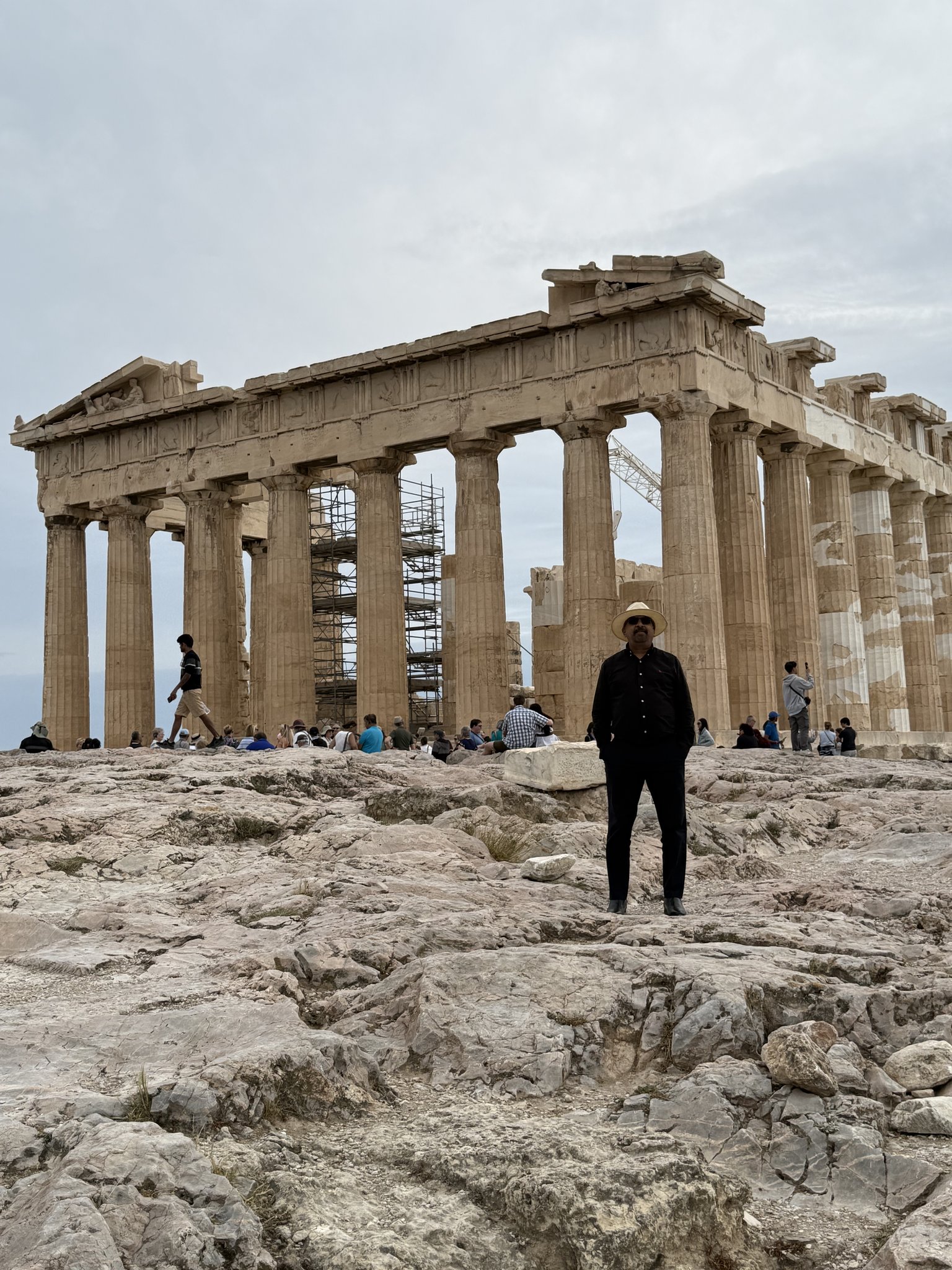
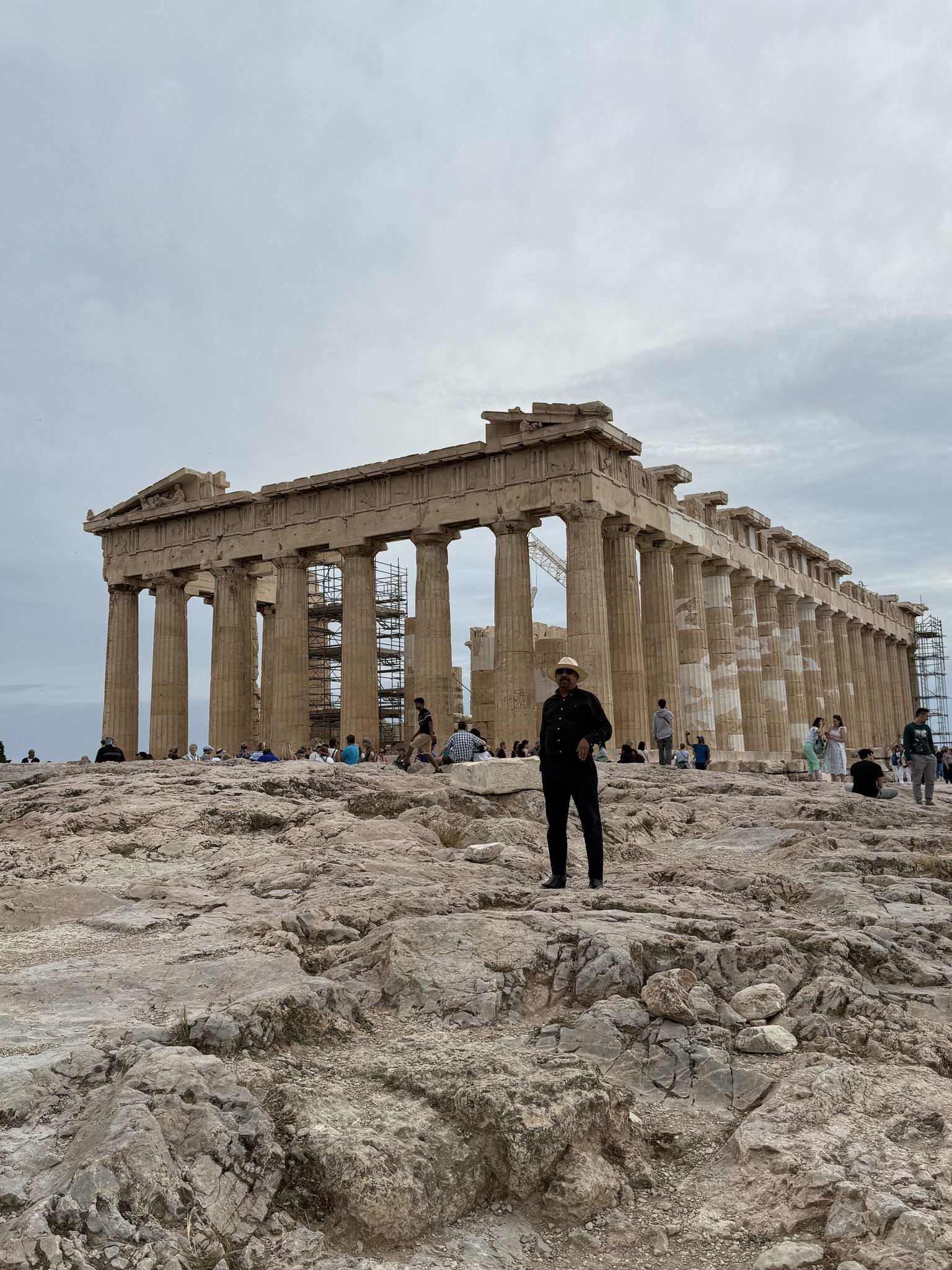
Athens now led an alliance of Aegean states, the Delian League, which it turned into an empire. The tribute helped pay for the rebuilding of the Acropolis under Pericles, with the Parthenon raised between 447 and 432 BC. The same decades saw the tragedies of Aeschylus, Sophocles and Euripides, the comedies of Aristophanes and the histories of Herodotus and Thucydides, and Socrates questioning his fellow citizens in the Agora. Rivalry with Sparta led to the Peloponnesian War in 431 BC. Plague struck the crowded city in 430, killing Pericles the following year, and a great expedition against Syracuse ended in disaster in 413. Athens surrendered in 404 BC, and the Spartans pulled down the Long Walls and the walls of Piraeus.
Macedon, Alexander and the Hellenistic World
404 to 146 BC
Defeat did not end Athenian life. A pro-Spartan oligarchy, remembered as the Thirty Tyrants, ruled briefly and brutally, but the democracy was restored in 403 BC and the walls were rebuilt within a decade. Socrates was tried and executed in 399 BC. His pupil Plato founded the Academy in Athens around 387 BC, and Aristotle, Plato's pupil in turn, later opened the Lyceum there. Their schools made Athens the centre of philosophy for nearly a thousand years.
Power among the cities kept shifting. Sparta, Athens and Thebes each tried to dominate the rest, and the Thebans broke Spartan power at Leuctra in 371 BC. These wars exhausted the old states and left room for Macedon, a kingdom on the northern edge of the Greek world. Philip II, king from 359 BC, built a professional army armed with long pikes and paid for it with the gold and silver of the north. In 338 BC he defeated Athens and Thebes at Chaeronea and then bound the Greek states into the League of Corinth under his leadership.
Philip was murdered in 336 BC, and his son Alexander, then twenty, led the planned war against Persia. In little more than a decade he defeated the Persian king Darius III, took Egypt, where he founded Alexandria, and marched as far as the Indus, before dying at Babylon in 323 BC at the age of thirty-two. His generals divided his conquests into rival kingdoms: the Ptolemies in Egypt, the Seleucids in Asia and the Antigonids in Macedon, which kept a grip on much of Greece. A Macedonian garrison held the hill of Mounychia above Piraeus for most of the century that followed.
The Hellenistic age that followed spread Greek language and culture from the Mediterranean to Afghanistan. A common form of Greek, the koine, became the language of government and trade across the east. Alexandria, with its Library and Museum, overtook Athens as a centre of science and scholarship, though Athens kept its schools and its prestige. The islands became prizes in the rivalry of the great powers. The Ptolemies kept a naval base on Thera in the third century BC, and remains of the ancient town on the ridge of Mesa Vouno date largely from that time. Crete, still divided among its quarrelling cities, was known as a source of mercenaries and pirates.
Rome was drawn in from the late third century BC, first against the Macedonian kings and then as arbiter of Greek disputes. Macedon was defeated in 197 BC, and its monarchy ended in 168. When the Achaean League rose against Rome in 146 BC, the Roman general Mummius sacked Corinth, and mainland Greece passed under Roman control.
Rome, Byzantium, Venice and the Ottomans
146 BC to 1821
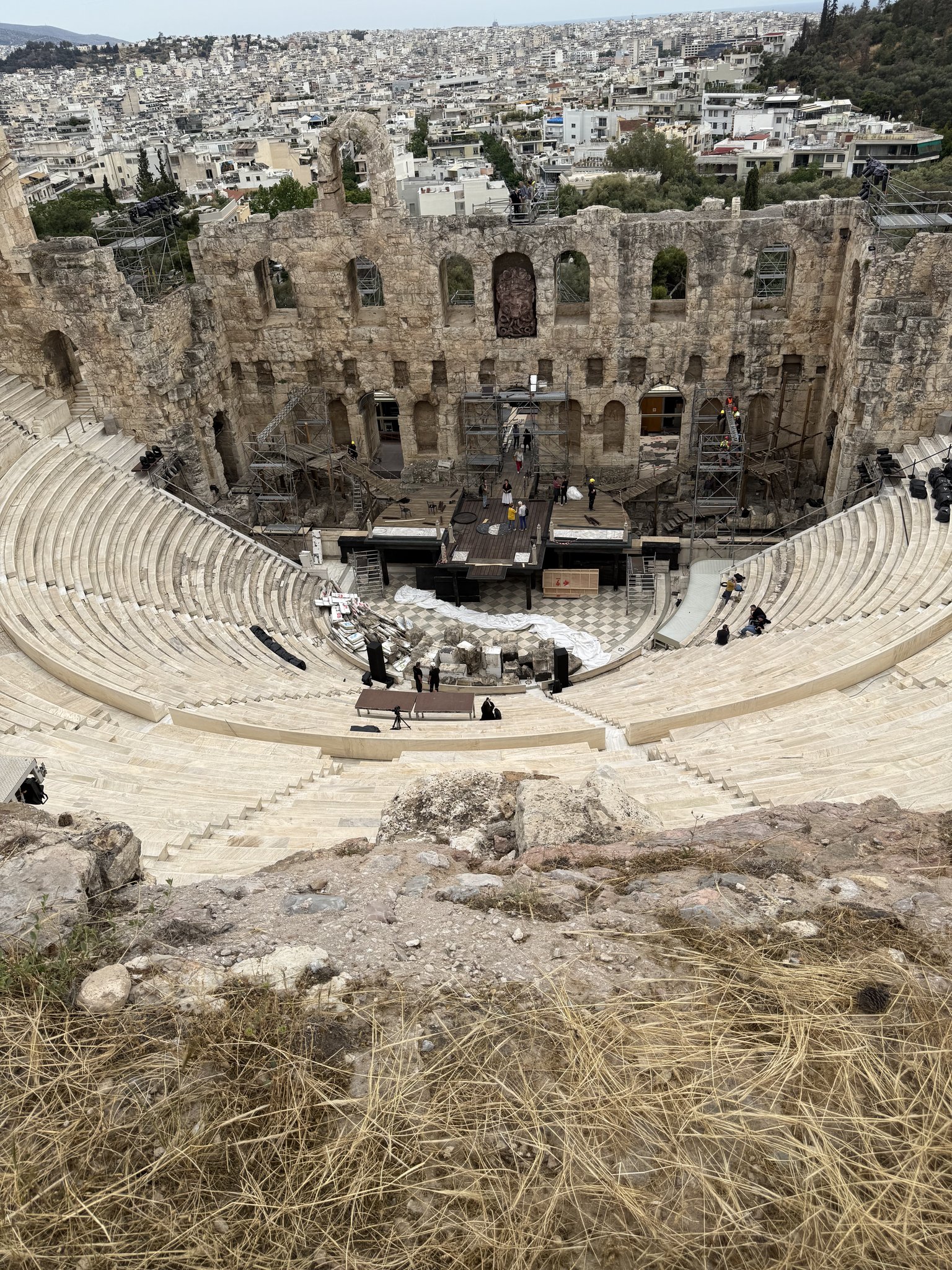
Under Rome, Greece was a province rather than a power, but its culture conquered its conquerors. Athens backed Mithridates of Pontus against Rome and paid for it in 86 BC, when Sulla stormed both the city and Piraeus. Crete was conquered by Quintus Caecilius Metellus between 69 and 67 BC, and Gortyn became the capital of a province joining Crete to Cyrenaica. Augustus made southern Greece the province of Achaea in 27 BC. Educated Romans studied in Athens, emperors adorned it, and Hadrian completed the vast temple of Olympian Zeus there in the 130s AD. In AD 161 the wealthy Athenian Herodes Atticus built the theatre on the slope of the Acropolis that still bears his name, in memory of his wife Regilla.
Christianity reached Greece early. The Acts of the Apostles describes Paul preaching in Athens and Corinth in the first century AD. When Constantine founded Constantinople in 330, the eastern Roman empire, the Byzantine empire as historians later called it, came to be centred on a Greek-speaking capital. The temples were closed or turned into churches; the Parthenon became a church. In 529 Justinian barred pagans from teaching, which is traditionally taken as the end of the philosophical schools of Athens. From the late sixth century Slav groups settled across much of the mainland, and Byzantine control was rebuilt only gradually over the next two centuries.
Crete took a separate course. In the 820s Muslim exiles from Spain seized the island and founded a fortified town, Chandax, on the site of modern Heraklion. It was the capital of an emirate until the Byzantine general Nikephoros Phokas retook it in 961.
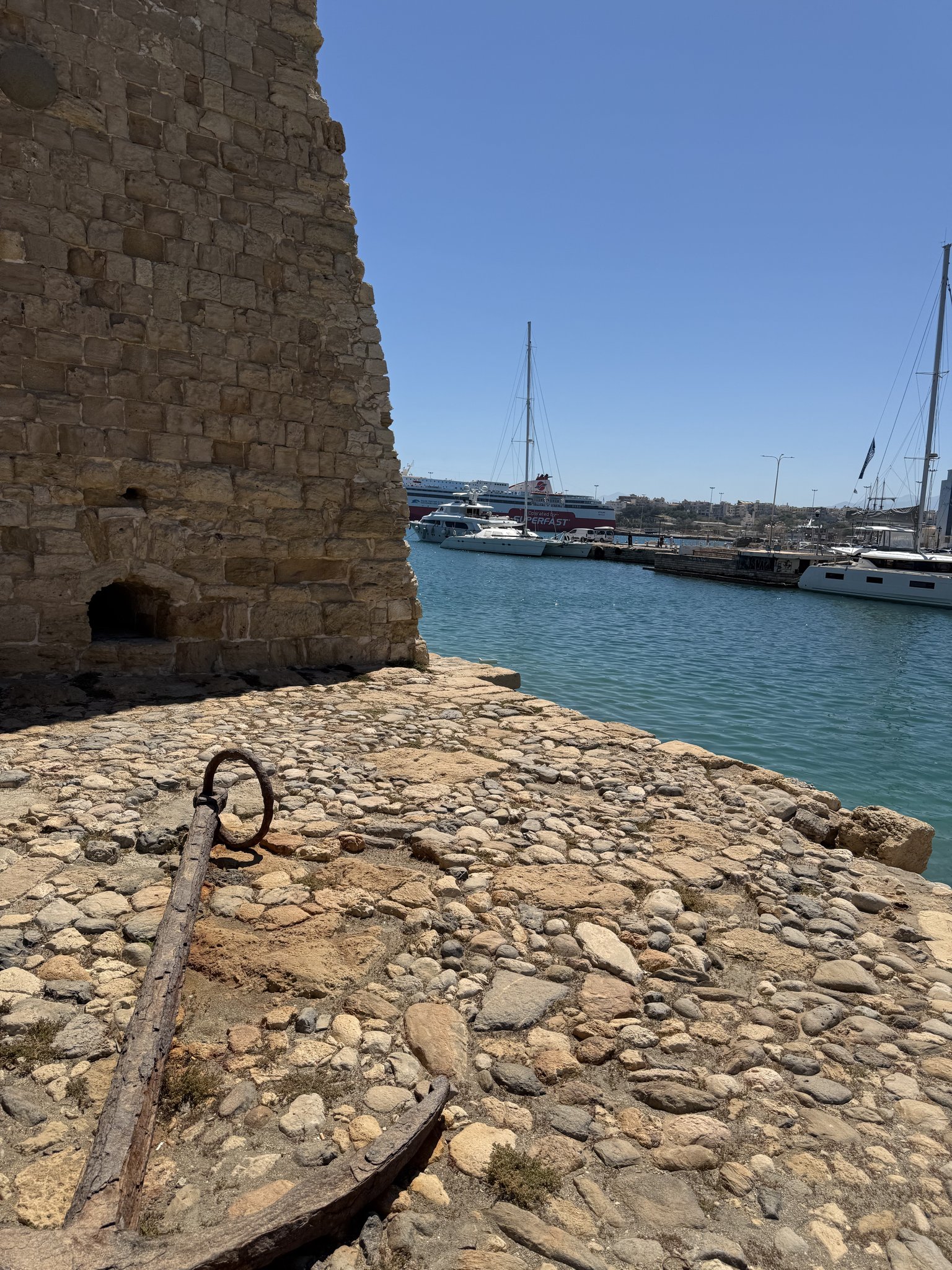
The Fourth Crusade broke Byzantine Greece apart. Crusaders captured Constantinople in 1204 and divided its lands. Athens became the seat of a Frankish duchy, later held by Catalans and then Florentines. Venice bought Crete and, after overcoming a Genoese challenge, ruled it for more than four centuries as the Kingdom of Candia. Its legacy is still visible in Heraklion: the city walls, the harbour fortress and the Morosini Fountain, opened in 1628 at the end of an aqueduct built under the governor Francesco Morosini. In the Cyclades the Venetian Marco Sanudo founded the Duchy of the Archipelago, which took in Thera; the name Santorini comes from the Latin period and refers to a church of Saint Irene.
The Ottoman Turks advanced through the fourteenth and fifteenth centuries. Constantinople fell in 1453, Athens in 1456, and the last Byzantine territory in the Peloponnese in 1460. Santorini passed under Ottoman control in the later sixteenth century. Venice held Crete longest. On the islet of Spinalonga, off the north-east coast, it built a powerful fortress from 1579, and Candia withstood an Ottoman siege from 1648 until 1669, one of the longest in history. Spinalonga itself remained Venetian until 1715. Its later history as a leper colony, from the early twentieth century until 1957, belongs to the modern Greek state. Venice struck back on the mainland too: in 1687 a Venetian bombardment ignited Ottoman gunpowder stored in the Parthenon, wrecking much of the building.
Under Ottoman rule the Orthodox Church remained the centre of Greek identity, and Greek merchants and scholars flourished abroad, from Venice to Vienna and Odessa. Ideas from the Enlightenment and the French Revolution reached them, and in 1814 a secret society, the Filiki Eteria, was founded in Odessa to prepare a rising. It came in 1821.
Independence and the Modern State
1821 to the present
The first planned revolt came on 6 March 1821 in the Danubian principalities, outside the country's eventual borders; the Ottomans crushed it, but by the end of the month the Peloponnese was in open revolt. In January 1822 the First National Assembly at Epidaurus declared independence, but the new state was unstable and lacked the resources to hold its territory. Britain, Russia and France saw the Ottoman counter-offensive as a chance to weaken the empire further, and after a decisive battle in Navarino Bay a ceasefire was agreed in London; the Protocol of London of 1830 recognised full independence. The assassination in 1831 of the first governor, Ioannis Kapodistrias, created instability that led Greece to become a kingdom in 1832 under the Bavarian prince Otto. Otto ruled as an absolute monarch from 1835 until the revolution of 3 September 1843, which gave the country a constitution, universal male suffrage and a prime minister as head of government. Ioannis Kolettis, prime minister until his death in 1847, is credited with conceiving the Megali Idea, the Great Idea that shaped Greek foreign policy until the early twentieth century. Otto was deposed by popular insurrection in 1862, the election of George I in 1863 brought the Ionian Islands from British rule the following year, and Thessaly was annexed in 1881. Economic depression and defeat in the Thirty Days' War weakened the state, and the Goudi coup of 1909 brought Eleftherios Venizelos to power with sweeping reforms.
Those reforms bore fruit in the Balkan Wars of 1912–13, where the army was led by Crown Prince Constantine, who became king when George I was assassinated during the first of them. Constantine wanted to march north, Venizelos east, and when Venizelos prevailed the Greeks took Thessaloniki a few hours before the Bulgarians arrived. The quarrel hardened into the National Schism over whether Greece should join the First World War: Venizelos backed the Allies, the king a neutrality that favoured the Central Powers, and when the king refused to sign a conscription bill he accused his prime minister of treason. Historians still disagree over whether Constantine's neutrality was genuine or effectively pro-German. In August 1916 followers of Venizelos set up a Provisional Government of National Defence controlling northern Greece, the Aegean islands and Crete. After fighting in Athens and a naval blockade of the south, Constantine abdicated on 11 June 1917 in favour of his second son Alexander, and Greece entered the war beside the Allies. Greece emerged victorious and gained territory by the Treaty of Sèvres, yet the schism's effects dominated Greek political life until the 1940s.
Mustafa Kemal's forces entered Smyrna in September 1922, burned it to the ground and pushed the Greek population permanently out of Asia Minor. By late that year Fridtjof Nansen, the League of Nations High Commissioner for Refugees, reported that roughly 900,000 refugees had crossed into Greece. In 1923 a compulsory exchange of populations expelled some 1.3 million people from Turkey to Greece and sent about 400,000 Muslims from Greece to Turkey. The revolution of 11 September 1922 forced Constantine's abdication in favour of George II and executed monarchist leaders in the Trial of the Six. Lausanne, the population exchange and a failed monarchist coup brought the proclamation of the Second Hellenic Republic in 1924, which fell after a failed Venizelist coup in 1935; the monarchy was restored by a November referendum that was almost certainly falsified.
With George's support Ioannis Metaxas carried out a self-coup on 4 August 1936 and established an ultranationalist dictatorship. Italian troops crossed the border on 28 October 1940, beginning the Greco-Italian War, but a determined Greek defence drove them back into Albania. Hitler attacked through Yugoslavia and Bulgaria on 6 April 1941; despite British assistance the Germans had overrun most of the country by the end of May, and the king and his government escaped to Crete and then to Egypt. Historians still disagree over whether Germany invaded Greece chiefly to rescue Mussolini's failing campaign or to secure its southern flank and the Romanian oilfields against British forces before Barbarossa. Nearly 100,000 people died of starvation during the Axis occupation from 1941 to 1944. The communists coalesced into the National Liberation Front and its National Popular Liberation Army, while the British covertly supplied the rival EDES, which fought both the EAM and the occupiers. In Moscow in October 1944 Churchill proposed to Stalin a division of influence giving Russia ninety per cent predominance in Romania and Britain ninety per cent in Greece, and Stalin agreed. The Germans evacuated Athens on 12 October 1944, British troops entered two days later, and the premier George Papandreou returned from exile on 18 October. British reinforcements retook Athens in an offensive launched on 3 January 1945 at the cost of 210 British dead, after which the EAM leadership agreed to disband ELAS, though many guerrilla leaders refused. Fighting resumed, with Tito supplying the rebels with arms; Britain formally withdrew in early 1947, and the civil war that had begun in 1946 ended in 1949 with the monarchy reaffirmed by victory.
A constitution of 1952 guaranteed basic freedoms, and under the prime ministers Alexandros Papagos and Konstantinos Karamanlis the country entered its economic miracle. That ended on 21 April 1967, when a military coup deposed the legitimate government and installed the Regime of the Colonels. The regime censored the press, tortured opponents, banned gatherings of more than five people and held thousands without trial. King Constantine II flew to Kavala in December 1967 hoping to find loyal troops, but the attempt failed for want of support and he went into exile, strengthening the hand of Georgios Papadopoulos. By 1973 Papadopoulos had begun a liberalisation, releasing political prisoners and partly lifting censorship, and on 8 October he installed a government under Spyros Markezinis to prepare elections, having already dissolved the monarchy by a referendum widely regarded as rigged. On 14 November the student unions at the Athens Polytechnic rejected the government's plans; the building was occupied, a radio transmitter set up, and the students broadcast their demand for bread, education and freedom. Athens filled with demonstrators and police tear gas through 16 November, and the first killed by a bullet was Diomidis Komninos. In the early hours of 17 November a tank crashed through the gates while students clung to the railings singing the national anthem, and twenty-four civilians were killed outside the campus. On 25 November Brigadier Dimitrios Ioannidis used the uprising as a pretext for a counter-coup that overthrew both Papadopoulos and Markezinis.
On 15 July 1974 Ioannidis orchestrated a coup in Cyprus that ousted the elected president Makarios III and installed the nationalist Nikos Sampson. Five days later 40,000 Turkish troops landed in the north of the island under a plan code-named Attila, and in two phases Turkey occupied 36.2 per cent of the republic's territory; the Greek Cypriot government puts the number of Greek Cypriots forcibly expelled at about 180,000. Greek attempts to mobilise failed, and on 23 July Ioannidis gave up his rule and called for a government of national unity. The next day Karamanlis landed from self-exile in Paris and formed that government, beginning the transition Greeks call the Metapolitefsi. Greek forces withdrew from NATO's integrated military structure on 14 August 1974 in protest at the occupation of northern Cyprus, and rejoined only in 1980. The first multiparty elections since 1964 were held on the first anniversary of the Polytechnic uprising, and the Panhellenic Socialist Movement, founded by Andreas Papandreou on 3 September 1974, took 13.6 per cent of the vote and twelve seats. A referendum chose not to restore the monarchy, and a constitution promulgated in 1975 declared Greece a parliamentary republic. Karamanlis pressed for membership of the European Economic Community, the associate status begun in 1961 having been suspended after the coup of 1967, and in 1981 Greece became the tenth member of the European Communities.
At the elections of 18 October 1981 PASOK won 48.1 per cent and 172 seats, forming the first socialist government in Greek history. Papandreou had campaigned for withdrawal from NATO and the EEC, but changed his policy towards both once in power. His first government recognised civil marriage as equal to religious weddings, created the National Health System and at last allowed political refugees of the civil war to return. By the late 1980s financial and corruption scandals and fiscal austerity had worn down his support, and after a spell of unstable coalitions he returned to office in 1993 before retiring in January 1996. His successor Costas Simitis won the right to stage the 2004 Athens Olympics in September 1997 and took Greece into the eurozone in January 2001. Greece had earlier failed the Maastricht criteria and misrepresented its finances to join the single currency, with Goldman Sachs helping to conceal part of its debt in 2001 through currency swaps. New Democracy, led by Kostas Karamanlis, won 45.4 per cent in March 2004. The Games cost the state more than 9 billion euros, the resulting borrowing lifted the 2004 deficit to 6.1 per cent and the debt ratio to 110.6 per cent of GDP, and in 2005 the European Commission placed Greece under fiscal monitoring.
When the American subprime collapse triggered a global banking crisis, borrowing costs rose and Greece could no longer service its mounting debt. George Papandreou won the elections of 2009 and within weeks revealed a budget deficit that would exceed 12 per cent of GDP, nearly double the original estimates and later revised up to 15.4 per cent. Credit-rating agencies cut Greek debt to junk status, and to avoid default the IMF and the EU lent 110 billion euros over three years in May 2010 in exchange for austerity measures including 30 billion euros of cuts and tax rises. Papandreou called a national referendum on a second bailout, then called it off, was forced to step down, and the economist Lucas Papademos took over at the head of a unity government. That second bailout, worth 130 billion euros, carried a 53.5 per cent write-down for private bondholders, and the restructuring completed on 9 March 2012 was the largest in history. PASOK and New Democracy collapsed in the elections of 2012, though Antonis Samaras formed a coalition in June with 30 per cent of the vote. Mario Draghi's vow to do whatever it takes to preserve the euro brought down borrowing costs, and in 2014 Greece returned to international markets with its first Eurobond issue in four years. In January 2015 Syriza won a resounding victory under Alexis Tsipras, the first prime minister from outside the two main parties. His government missed a 1.6 billion euro payment to the IMF on 30 June, the first default to the Fund by a developed country, and imposed capital controls limiting withdrawals to 60 euros a day; it then accepted the terms that voters had overwhelmingly rejected in the referendum of 5 July, opening the way to a third bailout worth up to 86 billion euros. The crisis ended around 2018 as the bailout mechanisms closed and growth returned; that year Tsipras and Zoran Zaev signed the Prespa Agreement, settling the dispute over North Macedonia's name. Kyriakos Mitsotakis of New Democracy became prime minister in 2019 and won a further term in June 2023. Parliament elected Katerina Sakellaropoulou as the first female President in 2020, the COVID-19 pandemic brought fresh economic hardship, and in February 2024 Greece became the first Orthodox Christian country to recognise same-sex marriage and adoption by same-sex couples.
The first same-sex wedding under the new law took place on 2 March 2024 at Nea Smyrni in Athens. Parliament had also brought in postal voting that winter, which the Interior Minister, Niki Kerameus, called the first such provision in the history of the Greek state. It was tested at the European elections of June 2024, when New Democracy came first but lost ground in both votes and seats. That autumn Syriza broke apart in leadership feuds and the ousting of Stefanos Kasselakis, and the defections allowed PASOK to become the main opposition. The Economist ranked Greece among the five best-performing economies in the world that year. Relations with Turkey eased, the two prime ministers and presidents meeting six times over sixteen months, and in Thessaloniki the long-delayed metro finally opened to passengers on 30 November.
Kostas Simitis died on 5 January 2025 at the age of 88 and was mourned with state honours. Parliament needed four rounds to choose the country's next head of state, electing the former speaker Konstantinos Tasoulas on 12 February with 160 of 300 votes; he was inaugurated on 13 March. The Tempi rail disaster of 2023, which killed 57 people, still shaped public life, bringing mass demonstrations on its second anniversary and the resignation of the deputy minister for civil protection, Christos Triantopoulos, over allegations that he had tampered with evidence. On 14 March Moody's lifted Greece to Baa3, the last of the major agencies to end the junk rating dating from 2010. In June the migration minister Makis Voridis resigned along with four deputy ministers and officials over alleged mismanagement of EU farm subsidies by the paying agency OPEKEPE. Migration policy hardened through the summer, with asylum applications suspended for people reaching Crete from Libya and a law in September denying asylum to those who had crossed third countries judged safe by the European Union. Two nationwide general strikes in October did not stop labour legislation permitting thirteen-hour shifts, which Parliament passed on 16 October.
Kyriakos Pierrakakis, moved to the finance ministry in the reshuffle of March 2025, was elected President of the Eurogroup on 11 December 2025, a post Nick Malkoutzis described as marking the country's passage from bailouts and austerity to credibility and influence. The EU, the IMF and the government all expected growth of around 2 per cent in 2026, which Malkoutzis judged credible but far from guaranteed, resting as it did on EU funds, tourism and the absence of external shocks. The 2026 budget put investment at 17.7 per cent of GDP, the highest since 2009, though more than half the increase since 2021 came from the EU Recovery and Resilience Facility, whose disbursements were winding down. Debt was projected to fall from 154 per cent of GDP to 138 per cent, yet in cash terms to reach 360 billion euros. Eurostat recorded unemployment down from 17.3 to 8.6 per cent, but average net pay for full-time work hovered around 1,050 euros and Greece stood at 70 per cent of the EU average in purchasing power, the second-poorest member state. By October 2026 polling showed New Democracy short of its target for a majority, with the economy dominating voters' concerns, while the government pressed a maritime deal with Egypt in answer to the Turkey-Libya pact.
Where historians disagree
- whether the Dorians arrived as an invasion, as a gradual migration mixing with pre-Doric populations, or not at all, and whether the collapse had internal or external causes
- whether the end of kingship followed from the collapse of trade or from quite different internal causes
- whether former palace citadels generally became temple sites, or whether the few examples are exceptions
- whether the record shows a true break or substantial continuity between Mesolithic and Neolithic communities
- historians disagree over the powers' motives, Britain in particular seeking to contain Russian influence rather than to weaken the Ottoman Empire
- historians disagree over whether Constantine's neutrality was genuine or effectively pro-German
- whether Constantine formally abdicated or merely left the country under Allied pressure without renouncing the throne
- whether Greece deliberately falsified its accounts to qualify or whether the shortfall emerged through later revisions and changes of accounting rules
- whether Germany invaded Greece chiefly to rescue Mussolini's failing campaign or to secure its southern flank and the Romanian oilfields against British forces before Barbarossa
Timeline
- c. 7000 BCFarmers from western and southern Anatolia crossed the Aegean and brought agriculture to Greece.
- c. 2000 BCThe first Cretan palaces were built at Knossos, Phaistos and Malia.
- c. 1450 BCMinoan palaces burned, and Linear B replaced Linear A at Knossos, suggesting a new ruling class.
- c. 1200 BCMycenaean civilisation collapsed, with site after site on the mainland pillaged and burned.
- 510 BCCleomenes I of Sparta ousted the tyrant Hippias, and Cleisthenes then reorganised the Athenian citizen body.
- 490 BCAthens defeated Darius at Marathon.
- 480 BCAthens and Sparta defeated Xerxes, Themistocles luring the Persian fleet into the strait off Salamis.
- 431 BCPericles walled Athens and led it into war with Sparta.
- 404 BCAthens surrendered, leaving Sparta the leading power in Greece.
- 371 BCEpaminondas broke the Spartan army at Leuctra with the Theban contingent massed fifty shields deep.
- 338 BCPhilip defeated an Athenian and Theban alliance at Chaeronea.
- 323 BCAlexander died at Babylon aged thirty-two, having turned back from India when his army refused to go further.
- 146 BCGreece became a Roman protectorate.
- AD 330Constantine's city on the site of Byzantium became the eastern capital of the Roman Empire.
- 1204The Fourth Crusade took Constantinople, founded the Latin Empire and set up vassal states in Greece.
- 1453Constantinople fell to the Ottomans.
- 1460The Despotate of the Morea, the last Byzantine territory in Greece, fell to the Ottomans.
- 1821Revolt broke out in the Danubian principalities and was suppressed, but the Peloponnese rose in open rebellion.
- 1830The Protocol of London recognised full Greek independence after the battle of Navarino Bay and a ceasefire.
- 1832Greece became a kingdom with Otto of Bavaria as its first king.
- 1913Constantine, who had led the Hellenic Army to victory in the Balkan Wars, became king on George I's assassination at Thessaloniki.
- 1917Constantine abdicated after fighting in Athens and a naval blockade; Alexander succeeded and Greece joined the Allies.
- 1922Mustafa Kemal's forces drove the Greek population permanently out of Anatolia and burned Smyrna to the ground.
- 1923A compulsory population exchange sent some 1.3 million people from Turkey to Greece and about 400,000 Muslims from Greece to Turkey.
- 1924A failed monarchist coup brought in the Second Hellenic Republic.
- 1936Metaxas carried out a self-coup with King George's support and established an ultranationalist dictatorship.
- 1940Italian troops crossed the border, but a determined Greek defence stopped them and drove them back into Albania.
- 1941Germany attacked through Yugoslavia and Bulgaria and overran most of Greece; the king and government escaped to Crete and Egypt.
- 1944The Germans evacuated Athens, British troops entered the city and the premier George Papandreou arrived.
- 1946 to 1949Victory in the three-year civil war, fought against Tito-armed rebels, reaffirmed the monarchy.
- 1952A new constitution guaranteed basic freedoms, and under Papagos and Karamanlis Greece entered an economic miracle.
- 1967A coup deposed the legitimate government and established the Regime of the Colonels.
- 1973A tank crashed through the Athens Polytechnic gates as students sang the anthem; twenty-four civilians were killed outside.
- 1974Forty thousand Turkish troops landed in northern Cyprus, occupying 36.2 per cent of the republic and expelling about 180,000 Greek Cypriots.
- 1975A republican constitution was promulgated and Greece declared a parliamentary republic after a referendum rejected the monarchy.
- 1981Greece became the tenth member of the European Communities.
- 1997Greece won the right to stage the 2004 Athens Olympics.
- 2001Greece joined the eurozone having misrepresented its finances, with Goldman Sachs concealing part of the debt through currency swaps.
- 2004The Athens Olympics cost the state over 9 billion euros, pushing the deficit to 6.1 per cent of GDP.
- 2010The IMF and EU lent 110 billion euros over three years in exchange for austerity measures.
- 2015Greece defaulted on a 1.6 billion euro IMF payment, imposed capital controls and accepted a third bailout of up to 86 billion euros.
- 2018The bailout mechanisms ended and Tsipras and Zaev signed the Prespa Agreement settling the North Macedonia naming dispute.
Comments
No comments yet. Be the first to write one.